

The Way (2021) Film Review
One of the most important conversations that can’t seem to come to a collective agreement is that of rehabilitation of convicts. In regards to current justice standards this seems to poignantly divide waters because of something simple: experience. Everyone sees it differently because everyone has gone through something different.
But I believe it’s a matter that’s become stuck in the word itself. Rehabilitation is simply one step. And those that come after are essential as well.
It’s what the film The Way portrays, at least indirectly.
It takes us to a world that we’ve seen before. It’s been depicted countless times for the sake of the genre and the story, and protagonists have varied so much that the condition for such a real matter has been tainted.
Prisons, the imprisoned, the guards, the truth. And behind every crime and its punishment, a story. One that’s purposefully directed towards the goal to rehabilitate. But what’s there to cure, when you already know what comes next after you accept the horrendous crime you’ve committed?
With a spiritual and esoteric twist in its plot, The Way shows us more than the ideal prisoner. She’s a prisoner of herself, as well as the system. The day she’s meant to pay for her crime, we “live” her final checkpoint in the path to redemption. Even if doesn’t work for everyone, this is the story of a woman who willfully decides she can’t end it all without setting everything straight.
In The Way, we meet Jane Arcs on the day she’s to be executed. 13 years ago, she was convicted of a brutal crime and sentenced to die. When she got to death row, she was just an extension of the world she belonged to. But then, someone changed her life.
I won’t say much of Jane’s journey since that’s the heart of the film. But on the last day of her life, Jane faces something that’s more intimate and controlled than we could have thought of with the film’s introduction. This is not your average film about redemption at the last minute.
Beyond the evolution of Jane’s narrative arc, The Way successfully portrays her past. A short informative visit, into the world of underground fighting. It’s sordid, horrific, unnerving. It’s a survival society of violence, pimping, and mindless aggression. Fight scenes are jarringly effective in a fine mix of sound, editing, and acting.
However, the film’s motive is more of a spiritual one. Aside from the film’s complex third act, I enjoyed the presence of Jane during her last hours. She teaches everyone a lesson, even through silence. Flashbacks to her learning experience are essential as well.
The Way could be a boring collection of scenes. However, it goes further than the mere end of Jane’s life.
At the center, a good performance is crucial to this point. Eli Jane is astounding in her portrayal of a broken monster whose only chance at revival is through self awareness. A period that’s almost shameful in her consideration of a human condition. Jane’s physicality is daunting.
Written and directed by Dastan Khalili, The Way is a dramatic film that, through a curious twist of the martial arts theoretical plane, asks a set of truly important questions:
Who are the victims of the system?
Who are the real culprits behind human degradation?
And most important, have they always been that way?
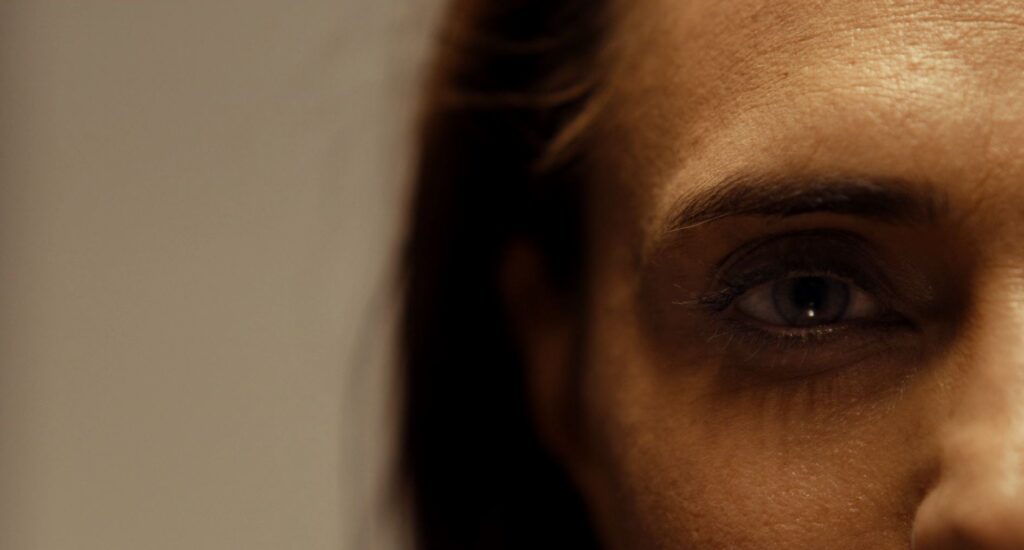
Time doesn’t heal by itself. It must be accompanied by drive, desire, intention. And this is something vivid in the stare of Jane.


