

The Panola Project (2022) Short Film Review
In the last two years, “hero” labels have been mentioned in several fields. From the scientists who worked non stop to come up with a solution for curing and preventing COVID-19, to those who were forced to adapt to a new way of life just because the world had to keep going on. And in the eyes of billions who bore witness to the most significant health event of the past century, one can’t beat the other. They’re all part of a system that required human will to be a fuel in a social mechanism that had to adapt to a new normality.
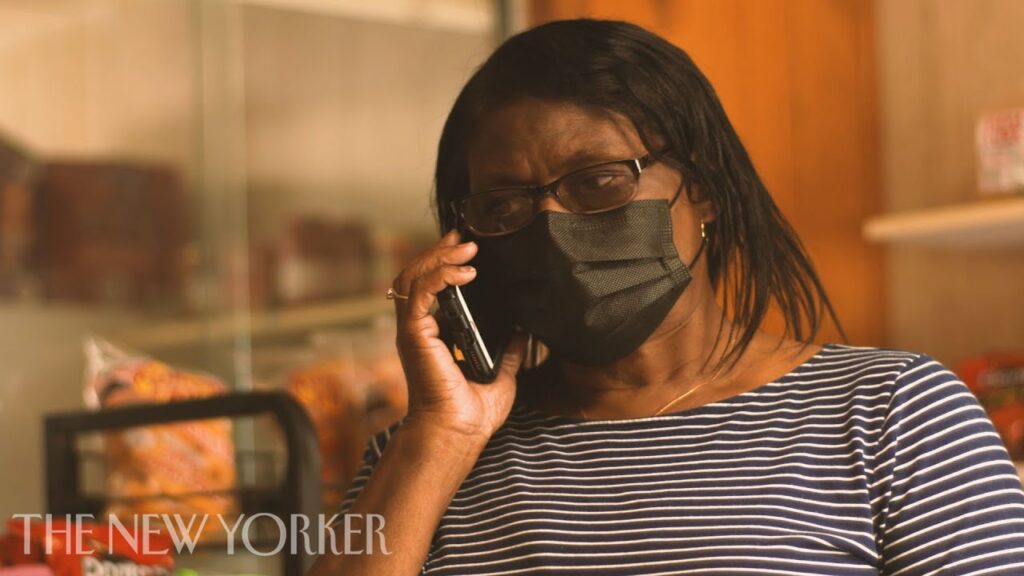
Our lifetime isn’t enough to tell the stories of them all. But it’s enough to dig deep into the stories of some of them. The ones who got rid of self-interest and decided to do what was expected of all, but only a few actually got around to it. In this group of heavenly creatures, we can find Dorothy Oliver, a beautiful human being who sought the well being of her small town during a critical time. The Panola Project is her story, but also of the dozens of women who campaigned for a vaccination scheme in Panola, a town located in Alabama, a state with one of the lowest vaccination rates in the United States.
Oliver runs a convenience store out of a mobile home. And every day she wakes up to make calls. But this isn’t random. She won’t stop until everyone in Panola gets vaccinated. She, alongside other women in town, organizes vaccination drives that work rain or shine. During her spare time, she visits those that remain doubtful about getting their shot. But this isn’t an indoctrination of any sort. Oliver has a mellow personality and a heart warming spirit. Her accomplishments are never ending because her drive is just infinite.
The Panola Project is born out of the minds of two young filmmakers, Rachael DeCruz and Jeremy S. Levine. They both dive deep in this momentum and come up with an optimistic story amidst a wave of hope. In the discourse for who’s a hero and who’s actually committing to their job, the film goes on to highlight the role of the underdog in our current state. It does so with a nimble script that also uses Oliver’s joyful spirit to enable a unique sense of humor in the film. There isn’t anything but smiles and dancing in The Panola Project and it seems unbelievable that we are at just the right time for that.
Some documentary projects call for a thorough examination of facts and shed light on events that are part of our reality. We absorb the information in a coldblooded manner just because we have to. The Panola Project is on a different spectrum, bringing hope to a world that perhaps needs it now the most, but is just afraid to show it.
I don’t think we should lower our efforts fighting a terrible disease. But we’re an evolved society with governments that have fought for the people they represent. Sometimes, it’s not enough, and fortunately this film has no intentions of being a revelatory document. Its argument is that of unselfishness as an organic trait.
There’s good in the world. Everyone who helps fight this situation is a hero in their own way and that’s the way it should be. Dorothy Oliver is simply a remarkable example of going further when being a caregiver in an era where care is needed, love isn’t enough and knowledge sometimes doesn’t arrive to every corner of the world.


