Tár (2022) Film Review
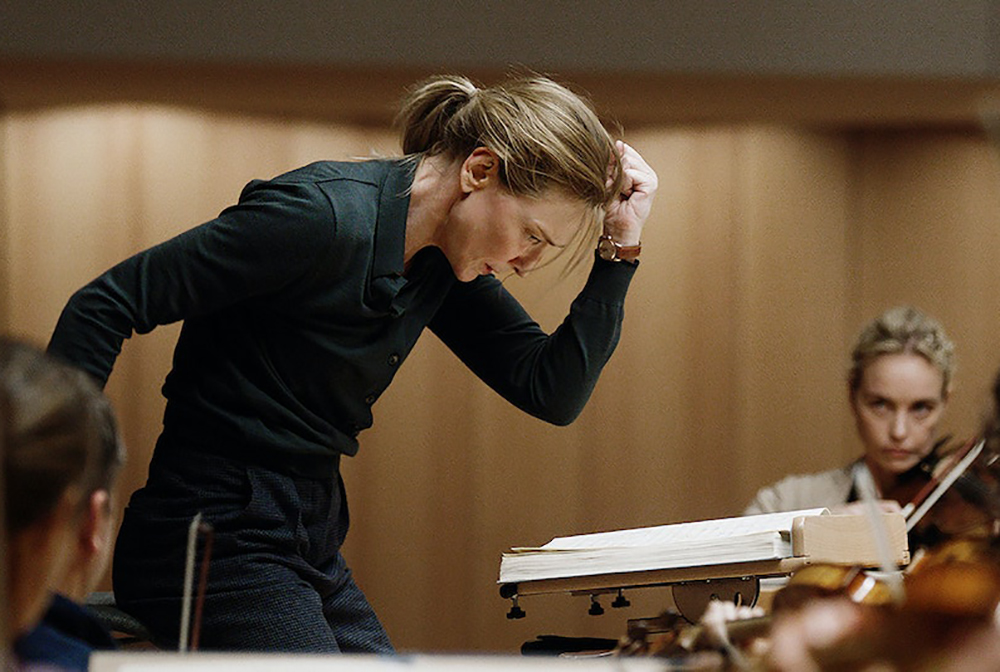
“Tár,” directed by Todd Field, is a case study of a critically acclaimed film that begs a closer look. It’s been described as “a masterpiece” and “note perfect” — not to mention what many are calling Actress Cate Blanchett’s ‘career best’ performance. Okay. So that hints at plethoras of artistry, but does not, I feel, tell us what the film is about, why it is relevant, and what is it raison d’être. What is its reason to be?
The film, is, succinctly, about a fictional maestro of a Berlin orchestra, who begins the film in an interview about Gustav Mahler’s “Symphony No. 5 in C Minor,” discussing the musicality, the themes, and the inspiration behind it. The interviewee is Lydia Tár (Cate Blanchett), and the interviewer is Adam Gopnnik (playing himself), an American essayist and writer, staff to The New Yorker. Interpreting Mahler’s 5th is, among other things, Tár’s raison d’être. So is power, influence, and in fact that title: ‘maestro.’ Tár is an apparent feminist and open lesbian. She disdains the term ‘maestra,’ meant to indicate a woman conductor, whereas other professions do not advocate for gender disparities in titles. She’s not wrong.
Power and its Abuse
But seething under Lydia Tár is a palpable narcissism, a need for her to set her own way, and to have her way seen as right. She doesn’t so much insist others see things her way, but, in her own way, dismisses others’ viewpoints segmentally, or sometimes outright. Her assistant, Francesca (Noémie Merlant), is along for the ride, a conductor assistant hopeful who never quite gets there. Also along for the ride is Lydia’s wife Sharon (Nina Hoss), and their child, Petra (Mila Bogojevic). They are living in Berlin, and Field’s cinematographer Florian Hoffmeister paints the city in a grey and dolor that transcend their muted pallet and instead become lived in and beautiful.
So “Tár” is beautiful, and acted passionately by Blanchett, who paints this female conductor — one of a few — with a drive that is palpable. But the film is also about something more, an elephant in the room that has eluded some reviewers, and that is about not just power, but abuse of power. There are hints of it, but only hints. We learn midway through the film’s third act that Tár has a history of offering quid pro quo sexual favors in exchange for advancement, and there is a very shadowed and insufficiently unraveled past with a former assistant, Krista Taylor, who has now killed herself after Lydia blackballed her and cut her out of her life. In the wake of this, in Field’s third act, we witness Tár’s fall from grace, rife with harassment and anger as she becomes victim to cancel culture.
Cate Blanchett at the Top of Her Game
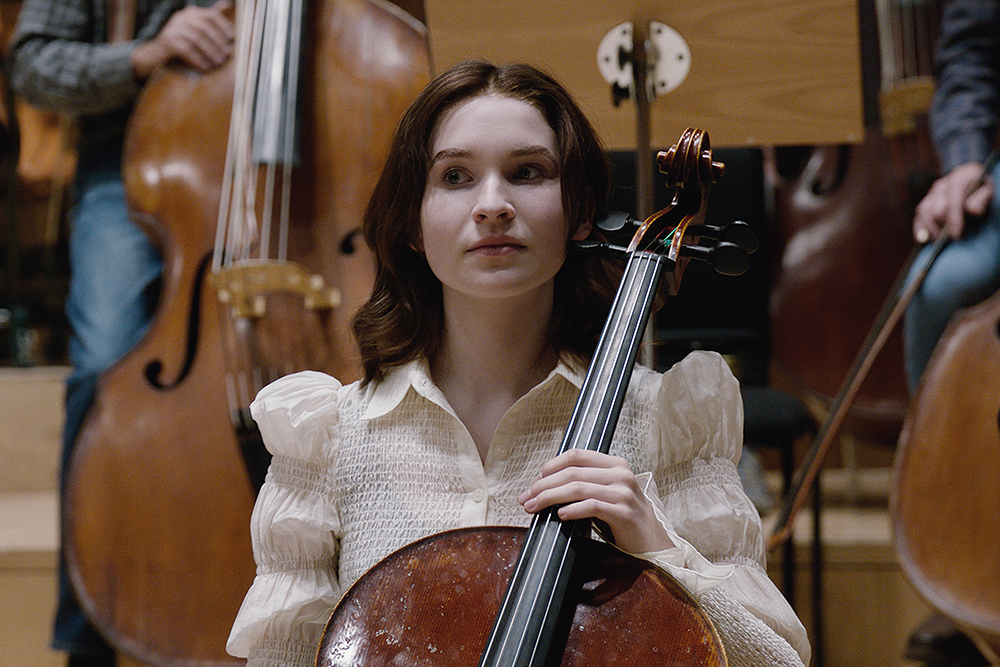
It seems odd to say, but necessary to, that “Tár” is not a film about music. Sure, there are orchestral rehearsals speckled throughout, which boom with loudness, tempo, and awesomeness. Lydia muses over sheet music and practices in her apartment, composing. But laboring over the music, her piano strokes and pen strokes seem secondary concern to her to conducting. To guide the tempo and interpret the original composer’s intention to the piece — these are where her passions lie. “Tár” includes a lot of classical music lingo. Discussing Beethoven’s works, Bach’s misogyny, and the playing style of pianist Glenn Gould (he’s contemporary, and one of my favorites), might drag some viewers into unfamiliar waters. But there’s no real love of music or celebration of it. The only exception is a new addition to the orchestra, the cellist Olga (Sophie Kauer, a real-life cellist and actress), whose playing is exquisitely beautiful, and transcendent.
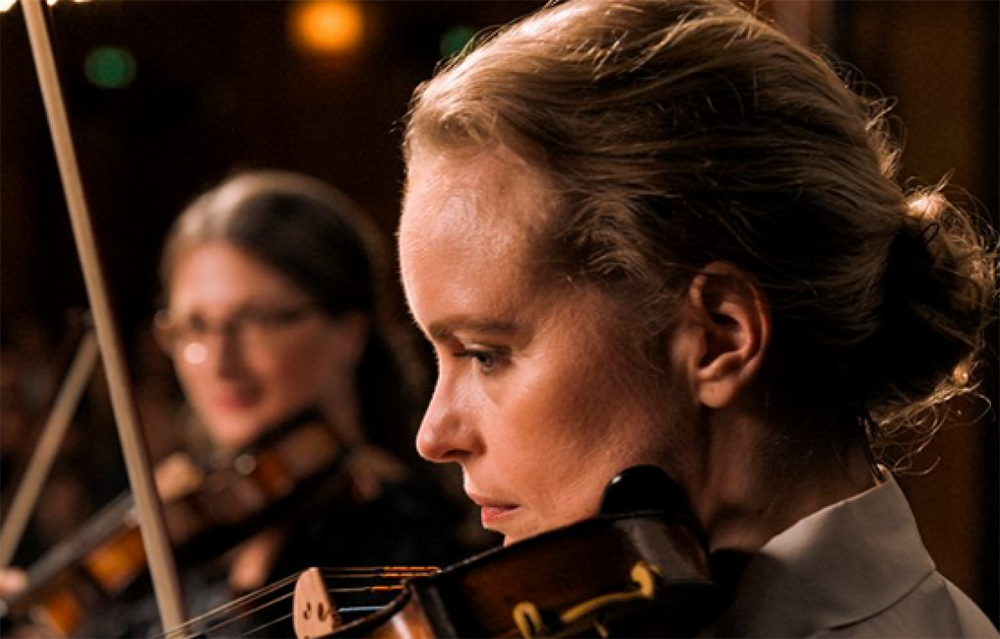
Field directs Blanchett to perfection, the latter who acts almost as a muse upon herself, and I liked the way Hoss and Blanchett have real chemistry. They feel like a real pair, not one that needs to be othered or explained in any kind of traumatic way because they are a same sex couple. Hoss’ Sharon is first violinist in the orchestra; this might be the first hint Field gives that perhaps advancement in Lydia’s orchestra isn’t all professionalism and merit. Olga is a new, pretty face (I do like the way Field and Hoffmeister show Olga’s shoes protruding from the blind partition she’s auditioned behind, alerting us to the fact she’s a woman). It’s not hard to see that Tár quickly becomes captivated with her, and hard to miss that no one notices save Sharon, which of course speaks volumes.
On Abuse and its Victims
It’s here that Field asks some hard questions, questions perhaps more difficult for the male audience than the female audience. After a mesmerizing cello performance, Tár congratulates Olga by caressing her cheek. In another scene, she answers the door to her apartment as Olga comes over to practice with just a robe on (there’s an explanation behind it, but still…). And I think what struck me most was I didn’t gasp at these at first. Then I thought about Harvey Weinstein, “She Said,” etc., and immediately realized my folly. These are things we easily understand when a male is the perpetrator. But maybe that’s what Field is trying to say. Maybe that’s why Olga carries with her a childlike grin and literally a teddy bear — to highlight innocence and those who seek to destroy it.
While I appreciated the hard questions Field makes us contemplate (the movie’s greatest strengths, in my opinion), I feel “Tár” drops the ball in following a lot of this through. The third act of Tár’s fall from grace is hasty and skips along at too fast a pace; and that’s saying something seeing as this is a 2 hour and 38 minute movie. There’s little in the way of backstory to Lydia Tár — how she got here, what she’s done to succeed, etc. — and the film propels us into her final oeuvre, so to speak. Field sprinkles little hints and notes of her past, alleged abuses (specifically with the Krista Taylor angle), but none of it feels final or enough. We see what happens to Lydia Tár, but we don’t really feel it. The credits roll, and I felt the absence of an emotional connection: both to Tár and the events that have unfolded. This is ultimately the film’s biggest demerit.
A Somewhat Incomplete Character Study
On the whole, I feel “Tár” is an incomplete character portrait that misses some opportunities. It shows a lot of the what, but less of the how and little of the why. Blanchett is splendid as touted, but in fairness, the rest of the performances are great too. I was drawn to Lydia Tár’s world, but less to her passion, probably because power is what drives her, not necessarily music. The closing scenes show there may still be some life and love left in her, but it felt too little too late.
As far as a study in cinematography, power, and narcissism, Field’s film shines. However in terms of a character we can relate to, it struggles. Tár is toxic, as many in power, like the aforementioned Harvey Weinstein have been throughout time. However at times, “Tár” can feel like “She Said” told from Weinstein’s point of view. That Field seems to ask us to feel for Lydia in its final moments feels inappropriate, and the hurried way he pushes through Tár’s fall steals a lot of the film’s thunder. Still, the film is gorgeous to watch and does make you think, so if you’ve heard the hype, it’s probably worth your time.
Side note: Mila Bogojevic, who plays Lydia and Sharon’s daughter Petra is a delight. I hope we get to see more of her in a film with more screen time.