

Sound of Hope (2024) Film Review
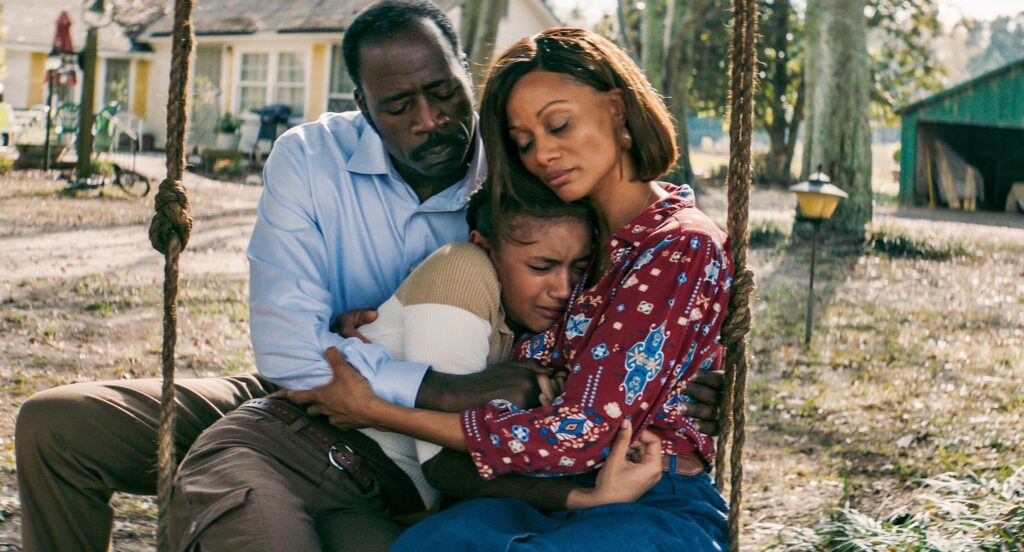
Sound of Hope, also known as Sound of Hope: The Story of Possum Trot, is perhaps a bit excessive in its risk-free depiction of its real story. There’s no jeopardy in the setting, and the only “danger” is based on the possible refusal to indulge in a beautiful act of kindness. As much as we would like to believe that anyone can adopt a child, the reality of the subject matter is much more complicated. If you can get past the fact that such a process is depicted in a sugarcoated fashion that resembles a Hallmark adaptation, then Sound of Hope will be right up your alley.
The film tells the true story of the Bennett Chapel church in the town of Possum Trot in East Texas. Led by Reverend Martin, the church will bear witness to the Martins’ decision to adopt a kid from the foster system. The brave act of absolute kindness seems to be contagious as more families join the venture of raising children without asking many questions about where they come from. Eventually, people from the church would end up adopting 76 children raised in foster care in two years. Sound of Hope is a chronicle of the emotional hardship of trying to convince the system that such a feat could be accomplished with nothing but heart.
Early on, I decided to blindly follow the film’s narrative and not ask the questions that arose. Fortunately, it wasn’t a forced move as the film is captivating enough from the beginning; the great performances were essential to connect with a story with a weak first act. Nevertheless, I fell for the conflict early on because sometimes films make you believe in human kindness with a good set of characters that all run towards the same goal.
Sound of Hope is the creation by Joshua Weigel, who writes, produces and directs the film. Beautifully shot, the film almost has no relation with its indie backdrop of production value. With today’s wide access to technology, you only need a good DP, and Weigel seems to have hit the jackpot with his production. Yes, it does look as gorgeous as any other big Hollywood film.
But what does stand out are the performances. Every single one of them is based on pure honesty and the great direction by a filmmaker who understands the tone of his own film. Weigel restrains his performers enough to stop them from being excessively dramatic, adding fuel to a melodrama that already feels poignant. Nika King, Demetrius Grosse, Elizabeth Mitchell and Diaana Babnicova, are only a handful of the performers who make Sound of Hope an enjoyable and emotional experience that will, at the risk of being redundant, give you more hope for humanity.
Yes, there is a need for something else. There is a perilous element in every narrative, one that sparks conflict beyond the predictable ending. In Sound of Hope, there’s none of that and it could mean the film’s overly innocent in the plot development. But again, sometimes you’re not supposed to ask questions and enjoy for the sake of the extraordinary true story in question. Once you fall into this mindset, you will enjoy it and probably shed a few happy tears.


