Short Film Sofa Surfer Hightlighting Homelessness
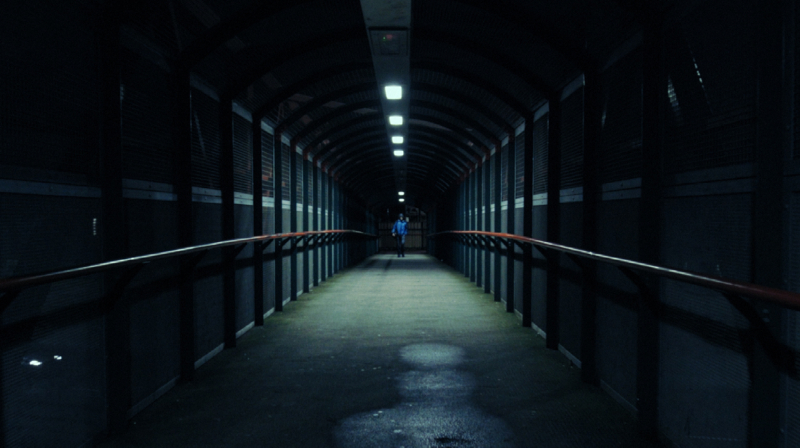
Director Michele Olivieri and screenwriter Kim Taylor first met in September 2017 to discuss making a low-budget short film based on a story by Taylor. After months of script development and pre-production, the shooting took place in the summer of 2018 for a total of three days.
Unfortunately, once in the cutting room, it became clear that the movie was not what the team had hoped for. A lot in the footage just didn’t work and it involved almost every department. It took a few months to get over the disappointment and swallow the hard pill, but eventually, Olivieri and Taylor took the difficult decision to discard the whole footage and try again, knowing that things had to change dramatically this time around.
As a result, the script underwent heavy rewrites, the story was cut back and made to centre around the main character’s own internal conflict, the actors were recast, the crew were replaced and other decisions were taken to ensure things wouldn’t go south again. Finally, in February 2020, in between storm Ciara and storm Dennis and right before the UK was conquered by the pandemic, principal photography took place in East London, with a skeleton crew, for only two days. Filming locations include the areas of Westferry/Limehouse and the suburbs around Leytonstone.
Sofa Surfer was edited by Olivieri, mostly late at night, while spending the first lockdown in his Italian hometown of Verona. The excitement toward this picture grew bigger with each draft until it became clear the movie was going to be our best artistic achievement so far and a great addition to everyone’s portfolio. The picture was locked in August 2020 and the rest of the post-production went smoothly throughout the remainder of the year.
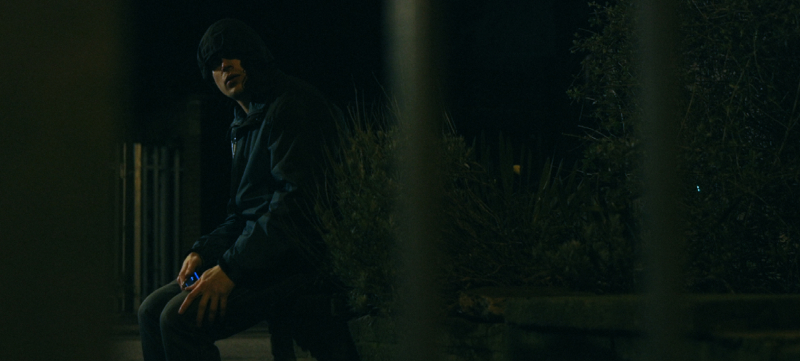
We got the opportunity to ask Michele Olivieri and Kim Taylor a few questions about their short.
Hi, thanks for chatting to us.
Where did the idea for ‘Sofa Surfer’ come from?
Kim: This story has been with me in one form or another since 2015. First, it was inspired by simply walking the streets of London and seeing the dire state of homelessness, too often among young men. Then it was inspired by hearing the term sofa surfer, ‘an invisible type of homelessness’ and sadly recognising it through an acquaintance. On the surface, as a writer, I want to bring attention to the two-fold struggle of an individual not only grappling with pulling themselves out of homelessness but also facing what led them there. Beneath the surface, as a writer at the start of my career, the fear that homelessness could happen to any of us loomed in the background and served as a push through several drafts.
What was the budget?
Michele: the production was low budget, about £1,200. We tried to save as much money as possible for festivals’ fee, which can get quite expensive. The total festivals’ fee amounts to about another £1,000.
Yeah festival fees quickly mount up.
Why the operatic score?
Michele: Most people who have watched the film said they were expecting some sort of electronic score given the concept and the setting of the film. I always strive to be original and do things differently, in my opinion, filmmakers should try to surprise their audience. I am a huge fan of Kristof Kieślowski and when I was looking for references, I kept rewatching ‘La double vie de Véronique’ (1991) and just loved how masterfully it was scored. The rest is magic from my trusted composer (and friend) Jean-Loup Pinson.
The soundtrack can make or break a film.
Well thank you so much for chatting to us. We really appreciate it.
Today the film is in festivals, set for a 2022 release.
So What is Sofa Surfing?
A Sofa Surfer is a homeless individual who stays temporarily with friends, acquaintances or relatives while attempting to find permanent accommodation. They do not own or rent a property and solely rely on the kindness of others. Many are sofa surfing or sleeping on the streets because of family breakdown, having outgrown children’s homes, domestic abuse, end of tenancy, loss of a job, etc. Many become depressed, at risk, turn to substance abuse and because of their constant moving, they are not often able to get appropriate help. Personal relationships also suffer.
Data suggests sofa surfing is the largest form of homelessness (yet the least visible and understood) and that 35% of all young people, especially men, have experienced sofa surfing at some point in their lives. Key findings of the 2019 Crisis’ report suggest “there are 71,400 homeless families and individuals forced to sofa surf across Great Britain on any given night” and a third of them have been doing so for more than six months.
For more information on Sofa Surfing you can read a very interesting reprt from CRISIS HERE.