

Kindred (2020) review
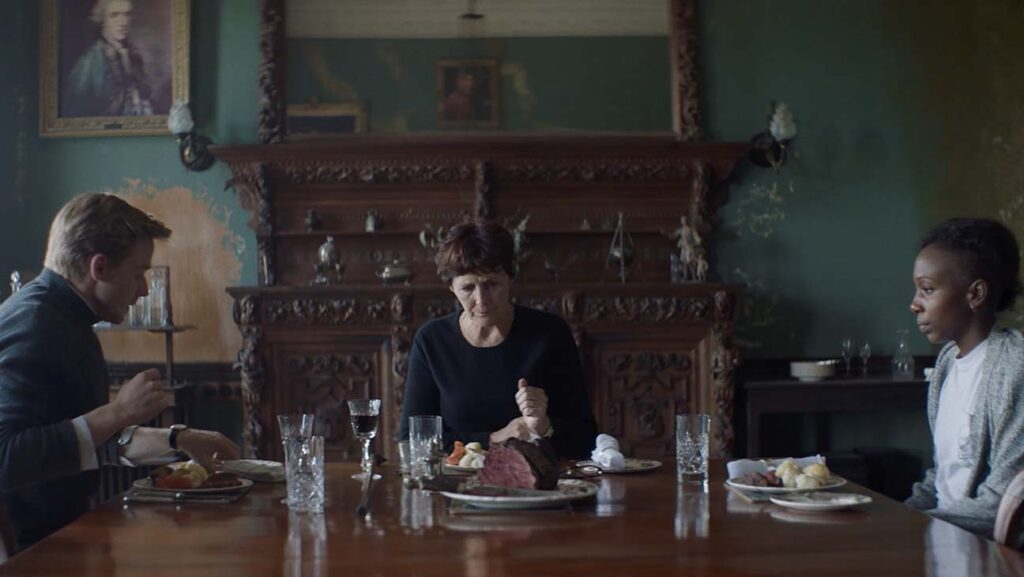
In the first ten minutes of Kindred, we get to know several stories. There is a couple whose rhythms have always been different but they’re happy together. His family is dominant and possessive. Hers is practically inexistent. A conversation is enough for the audience to understand the kind of relationship they have. A second conversation opens up the curtain and reveals the kind of family she’s entering.
It’s a wise presentation of resources. We are immediately engaged by the possibility of descent: it’s the basis of psychological thrillers that focus solely on one character and do ambiguous shows of supernatural themes and broken minds.
However, the problem in Kindred has more to do with its sober approach. It’s a film that feels unnecessarily harmless and has no intent to boost its margin of malice. This doesn’t very often, but at some point I really wanted to movie to just end.
Charlotte is happily married to Ben. They both come from different sides of society but it hasn’t stopped them from being a lovely couple. Ben’s family is kind of particular. His mother, Margaret, is manipulative and powerful. His “brother” Thomas, only lives to serve their mother.
In this uncomfortable scheme, Charlotte and Ben decide to move to Australia, far away from Ben’s family. Of course, Margarete flips out. To make matters worse, Charlotte gets pregnant. At her subtle intent to get an abortion, Margaret reacts again.
How to make matters worse? Tragedy strikes and Charlotte’s life is flipped upside down. She’s left at the mercy of her husband’s family. The pregnancy must continue, and the intentions of this family don’t appear to be as kind as they seem.
The best element in Kindred’s plot is that it doesn’t try to go beyond its boundaries of naturalistic horror. There isn’t more sinister than what you see in Margaret’s behavior as a matriarch with a conservative agenda. Charlotte’s performance as an expectant mother is unclear because the character seems to go back and forth between her need to escape and the need for companion. That scene with the piano doesn’t help at all.
As the film progresses and plays its repetitive pattern, we go deeper into Thomas and Margaret’s plan. Gaslighting and captivity are two of their best methods to keep Charlotte in a hazy aura of necessary protection and safety. Kindred’s horror stage is not very effective, but at least it feels relevant to some point.
What’s even more important than the fine use of genre, is Margaret’s effect in Charlotte. Using great dialogue, the truth behind her consideration becomes clear. A monster doesn’t always have to look monstrous.
I just wanted to clear that up. Pay no attention to the poster because this is not that kind of movie. It’s an unsettling journey into the possibility if isolation during a period where you need constant support. In that lonely room, you only get glimpses of a horrific setting brought along by a relationship with an acquired family.
That is Kindred, a dull film that only collects possibilities.


