An Interview with Filmmaker Jay Woelfel
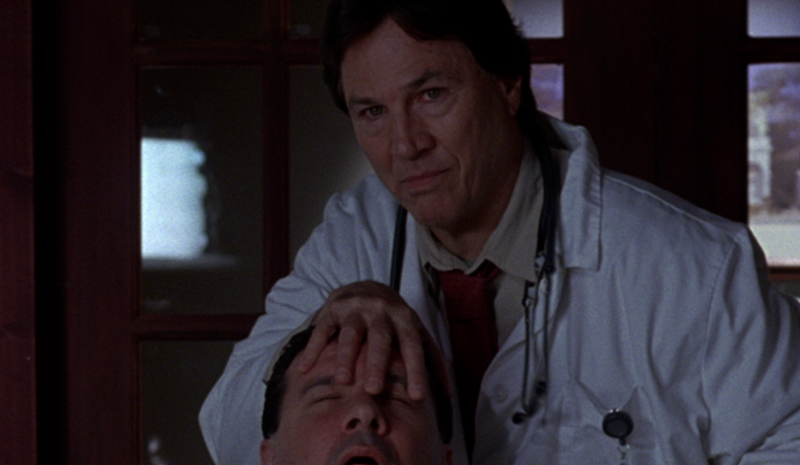
Wild Eye Releasing unlocks the doors to award-winning filmmaker Jay Woelfel’s supernatural horror feature Asylum of Darkness this April. Woelfel’s stirring cocktail of supernatural suspense and goosebump-inducing horror features a superlative cast of sci-fi and horror icons including Golden Globe nominee Richard Hatch (Battlestar Galactica), in one his final film appearances. Tim Thomerson (Trancers, Near Dark, Nemesis) and Tiffany Shepis (12 Monkeys, Tromeo and Juliet, Tales of Halloween) also star in the movie, a striking, spine-tingling horror jaunt, shot in 35mm, that resembles the works of genre icons Lynch and Cronenberg.
After awakening in a mental asylum, a patient plans his escape to freedom while fighting off supernatural forces in both the real world, and some that may only live inside his head. But once on the outside, he learns that the life awaiting him is more twisted and dangerous than anything he could conjur in his head, one that is luring him back to the asylum forever.
Written and directed by Jay Woelfel (Season of Darkness, Trancers 6), the film stars Golden Globe Winner Richard Hatch (Dr. Shaker), Tim Thomerson (Detective Kesler), Tiffany Shepis (Hope), Nick Baldasare (Dwight Stroud), Amanda Howell (Ellen), and Frank Jones Jr. (Van Gogh)
Congratulations on Asylum of Darkness! What a great concept! How did you come up with it?
Thank you very much. I thought it was new ground to trod. A kernel that became the concept comes from an idea in Christianity that nobody is really in heaven yet. Your soul is still here on earth until judgment day at the end of the world. So if that, then what…? Working out from there I thought, what if these soul’s got tired of waiting and decided to live again through others.
The whole idea of the main character not believing he is insane and not caring, comes to a degree from two real life people I know. In part, as a jumping off point only, this is certainly fiction and fictional characters, but those elements formed the concept. The character name of Dwight Stroud comes in part from the Stroud who was known as The Birdman of Alcatraz. The shape shifting ghost elements come from Japanese belief and folk tales, I spent time as a child in Japan so have always been interested in their culture etc.,
Great cast, too. Who among those actors were you a big fan of growing up?
Tiffany Shepis is younger than I am, so certainly not her, lol. Thomerson I had the most exposure with growing up and Hatch too, but have to give Tim the lead there as far as formative years. I have to include Nick Baldasare in this as he grew up with me to a degree being in a number of films of mine. This part was written for him. Most of the rest of the cast were new to me but I enjoyed working with all of them and think they did good work.
Did you have any prior relationships with them?
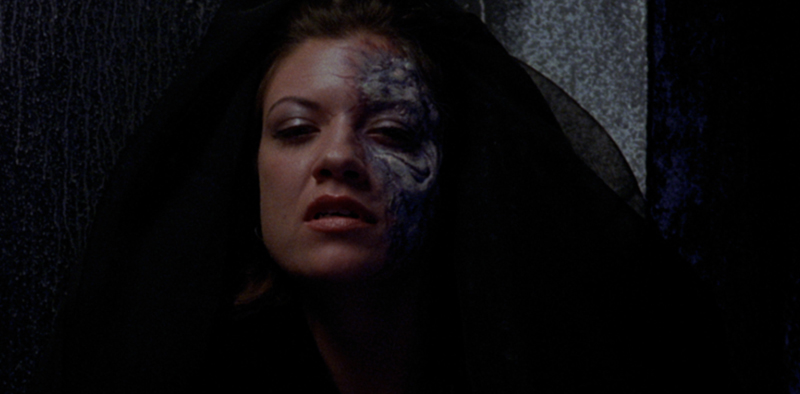
All three names I knew socially and as friends over time. Thomerson lived in the same apartment building that I did and we used to talk about movies while he was hanging out by the pool. Hatch and I became good friends over the course of 20 years of working together. Tiffany and I have many mutual friends and she did a small part in LIVE EVIL as a favor to me. This one I said was to repay that favor. Her part is really the payoff to the backstory of the whole movie.
Can you talk about Richard’s performance in the movie?
Richard walked in knowing his part pretty much word perfect. This was not the case with the other films I made with him and impressed me that he was even better prepared this time than in the past. He asked if the film had started as a novel—it had started as a long form treatment actually—but he felt it had the feel of a novel and that his character could be the jumping off point for a whole series with Dr. Shaker as the doctor at the Asylum. It’s kind of a spoiler this next thing he talked about, but to answer your question I have to answer, so skip this next italics sentences if you haven’t seen the film. He liked it because one possibility is that his character doesn’t exist, and if he doesn’t then he’s essentially talking to himself, he’s then playing the inner voice of a person and he found that really fascinating. That’s the key to how he plays the character the way you’d talk to yourself. Once we discussed that he was pretty much ready to do the role without much on set input from me, other than blocking and such. One last spoiler Richard had never gotten to kill a room full of people before. He enjoyed that.
He’d never worn heavy make up in a role before and was a little uneasy with the thought that people might not be able to recognize him. I came up with a way to have his character look different under different situations that helps the movie actually when you really find out what it’s all about. Nick Baldasare said working with him was a career highlight for him, given Richard’s experience.
Richard had never been in a graveyard at night before either. I told him, “see if you make films with me you get to do all kinds of things you wouldn’t get to do otherwise.” I did always try to give him new things to do with the characters he did for me, he liked that and talked about the problems of being type cast in his. The final lines he says in the film I wrote after the fact and were done as ADR (post production dubbing). There were technical problems with the recording session so Richard kept doing the lines over and over. He said “Let’s keep going until you get one you love.” Those lines he did are also the last lines he has in the movie as he literally walks into the misty graveyard and darkness. That certainly has a different impact now. Though I saw him a number of times after that, the ADR session was the last thing he said to me as actor to director and something I’ve not forgotten, nor will I now that he’s gone.
Asylum of Darkness plays a lot like a throwback Reagan-era supernatural movie. Was that the intention?
The original treatment comes from around then. Written for a distributor who said they wanted to finance a film of mine and they said what I did best was a movie about what’s real and what isn’t. I wrote a long treatment and then they said, we can’t tell what’s real and what isn’t. I said that’s what you asked for and that’s what the whole point of the story is. We took them to court over other matters and they had to pay out a settlement to us, but the movie never got made and existed as a thirty page treatment in a stack of material under my desk.
It stuck with me and years later I turned it into a full script. I decided to embrace what type movie it was when first conceived. From time to time a few body swapping villain movies, which is part of this one too, would come out, so I’d both think about this idea and or put it aside, eventually I wrote the full script. I almost sold it to the first producer who read it—that producer later went on to make Faith movies oddly enough. Then when the film finally got made the idea was to still shoot in Ohio with practical effects as had been the original intention. The FX people embraced this, as what by now is kind of a throwback supernatural movie. They had almost 12 weeks of prep time and were the first people hired to start work.
I’ve always preferred supernatural movies though most in the late 70s and 80s were slasher films which I never wanted to make myself. So it wasn’t totally in step back with the times when it was first written down.
But as a concept, not as a script, it’s an authentic Reagan era idea.
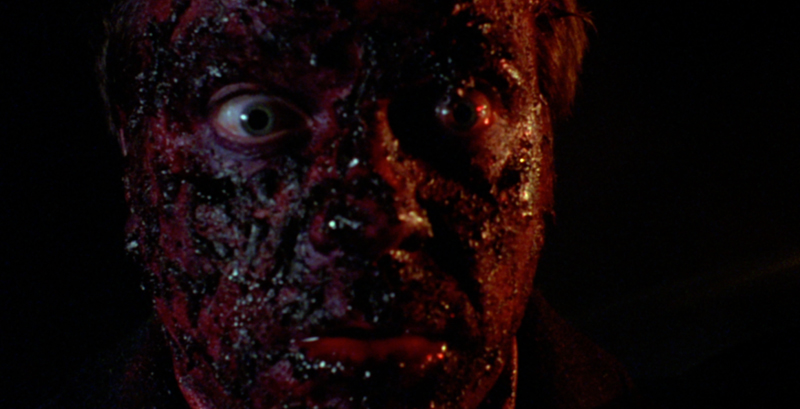
Another thing we did and the film was shot a few years ago before this was sort of a hip thing to say or do, was we shot on 35mm film and stayed away from all digital fx and even from digital post production methods. All the effects were done as what they now call practical on set effects, there isn’t even any digital blood in this movie, only the real Kayro syrup kind.
So, in addition to the concept, the look of the film is much more what you’d see back in the day before everything was shot in HD and finished on HD. In some ways it was actually less expensive to shoot it on film and finish the way we did. But now if I was to do a film I wouldn’t bother with 35mm it’s all died out almost entirely in a very short amount of time. It was one of only three film being finished on film at the lab in LA at the time.
Where can audiences find the film?
April 11th it starts its VOD run on virtually all the major platforms that’s through WILD EYE RELEASING who has U.S. rights and LEOMARK STUDIOS has it for foreign which will officially start this year at Cannes in May. Physical copies will come later in the year and will feature almost an hour of special features.