Fences Review
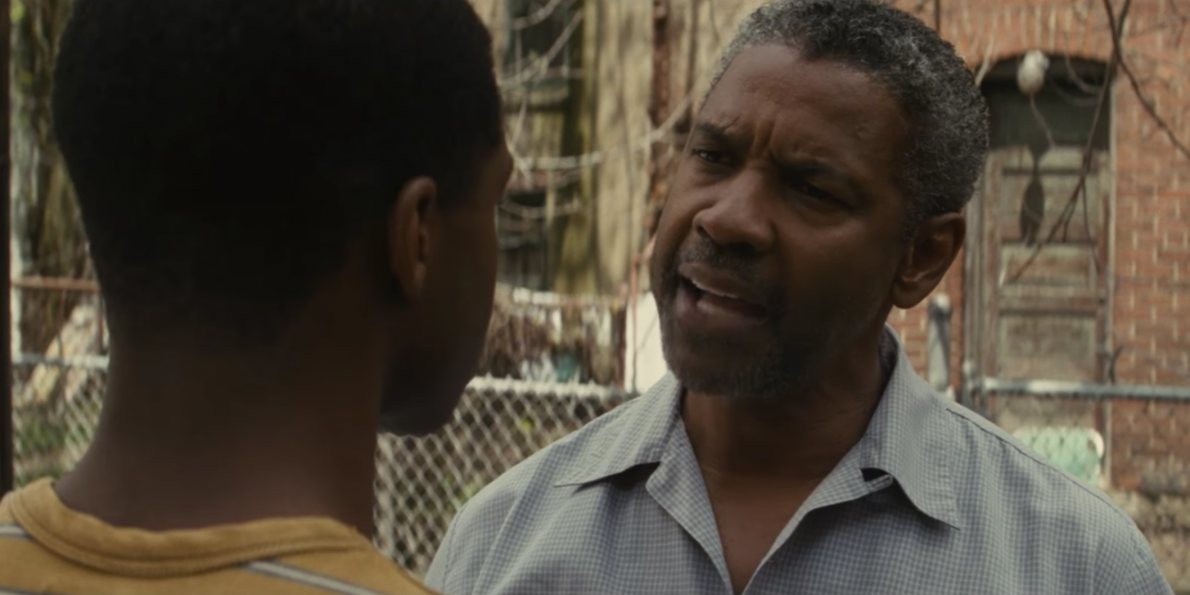
Denzel Washington stars, produces, and directs this adaptation of August Wilson’s famous Pulitzer-Prize winning play, and as a film, the story is a good one, the acting is breathtaking, and the film as a whole is very impressive, especially for Denzel’s third film in the director’s chair. This 50’s set drama has been one I’ve been looking forward to seeing, first off because his pairing with Viola Davis as his wife, especially since the two have played these two characters in a 2010 revival of the play, and just to see this play adapted is great. Plus all the Oscar buzz that has been building up, it’s kind of fun to sit back and see if it’ll live up to those expectations as an Oscar player. Sometimes it does, like in this case, and sometimes it doesn’t, like Joy (2015), which I had been up to its performance at the Globes in 2015 been touting as the Oscar front-runner. Well, I looked foolish then and now.
Anyways, so Fences is the story of Troy Maxson and his wife Rose, Denzel and Viola, and how they live in 1950’s Pittsburgh. Troy, a former baseball star in the negro leagues pre-Jackie Robinson age, is now holding his family together as a trash collector. Rose, his wife, in the meantime, is always at his side, loving her man, and their two sons, Cory and Lyons seem to be the two sons Troy is stuck with but still loves. This is especially how Cory views his father, in a famous scene asking why his father doesn’t like him. Cory’s dreams of football are crushed by Troy as he remembers his struggle trying to become a professional baseball player. Lyons, in the meantime, is pretty much a failed musician getting by with his wife’s daytime jobs and always asking his father for money. Troy always catches a laugh with his co-worker and neighbor Bono, but that’s just a slimmer of light for Troy. As the movie moves on, his self-destructive behavior makes Cory hate him, Rose start to resent him, and soon Lyons is nowhere to be seen, and even Bono doesn’t stop by after work like he used to. While all of this is going on, Troy also has to deal with his mentally impaired brother Gabriel, who stops by when he feels like it, and he’s also trying to build a fence for Rose to improve security for their home, ironically as the fence becomes more and more completed, Troy’s humanity and sobriety begin to slip he becomes the most dangerous thing in the house. There are a few other developments in the second half of the film, but that’s spoiler territory so if you haven’t seen the film, I’ll let you be surprised.
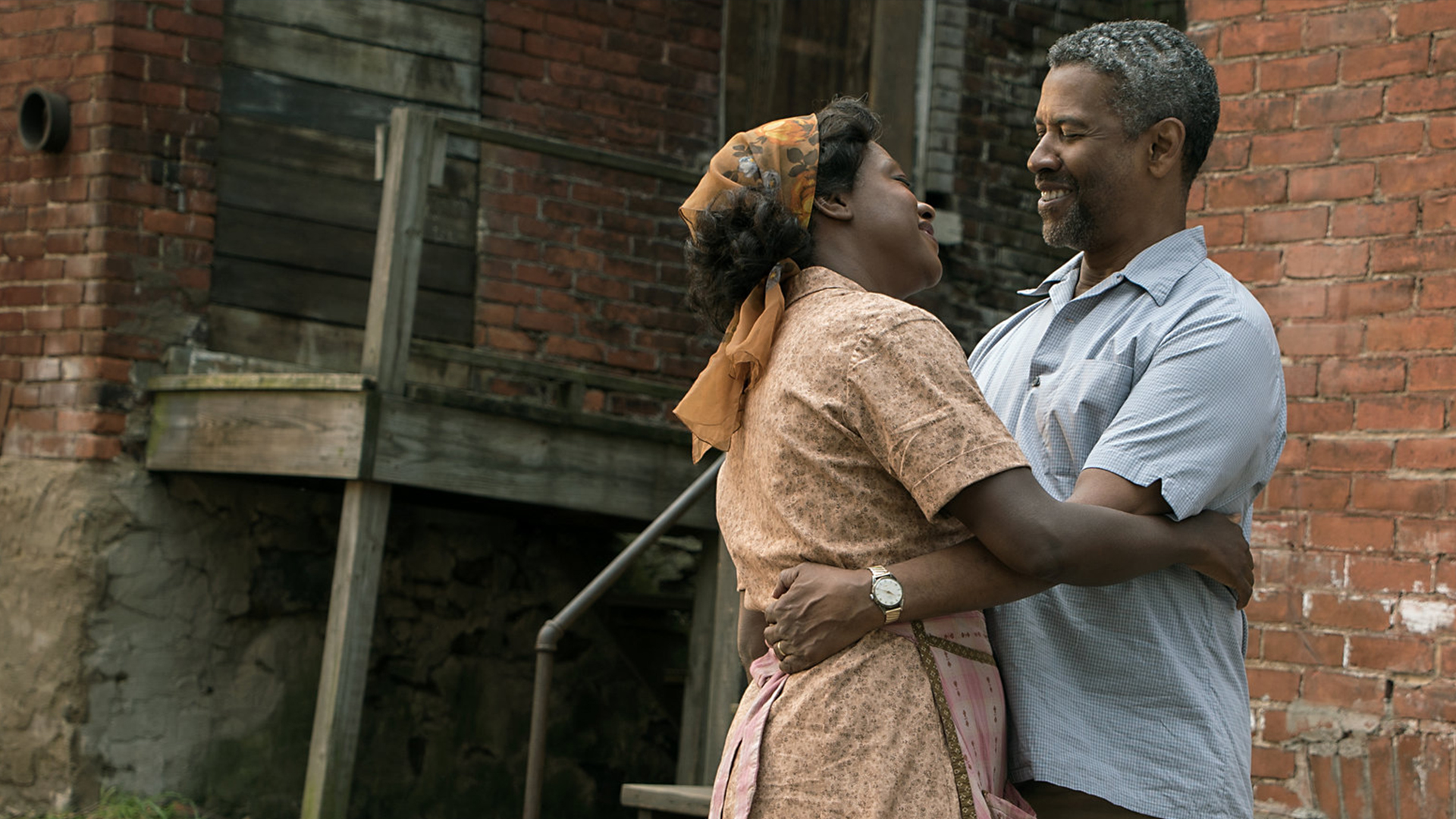
So yes, the acting by Denzel, Viola, and the rest of the outstanding ensemble will blow your socks off, even if you’re a longtime fan of Denzel and Viola, like me, whose performances in the past are legendary: whether it’s Viola’s Oscar-nominated roles like in The Help (2011) or Doubt (2008) or Denzel’s always great work in films like Glory (1989), Philadelphia (1993) or The Hurricane (1999). Fences offers the actors a new challenge, that true they have already achieved with their work on the stage as these same characters, but still, I didn’t see the play with them in it, so I was extremely impressed. While this is an actor’s showcase, Wilson adapted this play himself, with the possible assistance of Tony Kushner, and the writing is superb. A lot of the speeches are excellently written and performed, and while a lot of those speeches and monologues are lengthy, I’d say about five or six minutes minimum, you attention is held. These characters feel lived in a real. You could almost fool somebody into believing this is a true story, even without sticking that “based on a true story” on the start of the film. That’s just how good that original play was, and of course with Wilson also adapting it to the screen, that’s maybe why we feel the same with just the film.
For a few quick criticisms, the opening of the film was kind of hard to get into. Right away we jump in with Troy talking a million words a minute, and he’s telling stories about the devil and the grim reaper and all sorts of stuff, and at first I was taken aback at just how talky the film was. After I got used to it, though, I got over that and was in, and I wasn’t out until those credits started to roll. One choice Denzel made was to keep the setting restricted to the house or the backyard, and with few exceptions, we don’t leave there. Most adaptations of plays or musicals adapt and change the settings a bit because, well, it’s a film, not a stage play, so you can afford to move around and show more lavish sets. Fences bunked that and while it can be appreciated that he kept that feel, there are a few moments here and there where they mention something that happened off-screen that, frankly, I would have liked to have seen. And one quick one that I wanted to put out there, I wasn’t sure the very ending worked. I can imagine on the play to actually see the actors in front of you, their sweat, tears, and emotions very genuine and not makeup-ed, that what happens would have caused a huge emotional moment, but as a film it just didn’t have the same impact. If you’ve seen the film, maybe you did, but I feel like it was an element they could have cut and not lost much.
Anyways, these gripes aren’t things that heavily damage the film. It is still a really great movie, in fact it’s floating around my top ten list somewhere, and again Denzel and Viola are worthy of any and all awards they could and will win. The acting ensemble outside of those two include great work from Stephen Henderson as Bono and a should be nominated performance by Mykelti Williamson as Gabriel. Plus the kids are great, especially Jovan Adepo as Cory. The film is a nice window into 1950’s inner-city society, and could have been set anywhere: New York City, Omaha, San Francisco, Dallas, doesn’t matter. As a character study and a view of the society and times for African Americans then, it’s more than a good watch. It’s an important one that should be seen by everybody.
My rating: 9/10.