An Interview With Filmmaker Ted Stenson
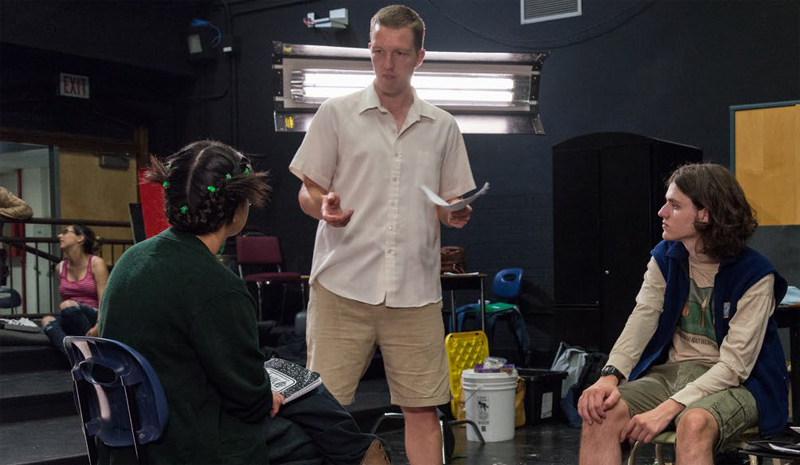
We were lucky enough to get the opportunity to sit down and chat to Ted Stenson about his movie Events Transpiring Before, During, and After a High School Basketball Game.
He Ted. Thanks for chatting to us.
What was the inspiration for this project?
I have always wanted to tell a story about a sports team that was terrible. I played on a lot of terrible teams growing up and I’ve never seen anything that really depicts both the humiliation and humor of that experience. There is something very funny, and kind of tragic, about a bunch of un-athletic kids playing sports, especially when they are coached by over-enthusiastic adults. My memories of playing sports are much more about the people I played with and the places I played. I don’t really remember the “dramatic” moments (because there weren’t any?). I do remember all of the awkward, ungainly kids I played with and the embarrassing enthusiasm of some of the coaches and the feeling of disbelief during particularly pathetic losses. It was these experiences that inspired the film.
I can relate to that! I have been on the end of some embarrassing losses in my tuime.
What filmmakers are you most influenced by?
At the time of developing this project I was extremely influenced by Roy Andersson. He is a Swedish filmmaker who is famous for his dry humor and use of static vignettes. While Andersson’s style is much more absurd and less linear than what I envisioned for Events Transpiring, I hoped to convey the same feeling of humorous, yet almost painful, banality. I was also influenced, perhaps more literally, by Michael Haneke’s film 71 Fragments of a Chronology of Chance. Similar to Andersson’s work, Haneke’s film is comprised mostly of static, seemingly disconnected scenes. Ultimately, these storylines collide and give shape to what has come before. It was while watching this film that I had the inspiration for Events Transpiring. Although 71 Fragments of a Chronology of Chance is deeply unfunny and much more political, I envisioned using its basic framework as a structure for a funny, largely apolitical high school sports film.
How did you draw on your high school experience when writing and directing this film?
I played basketball, football, and volleyball in high school at Queen Elizabeth, which is actually where we shot the film. Perhaps my school was somewhat unique but the “jocks” at my school were not the stereotypical cool, promiscuous drunks you see in movies. Most of the people I played sports with were either really religious or really nerdy. None of us had cache because we were athletes. The “vibe” in the locker room was both tame and pretentious. I can distinctly remember arguing about Camus’ The Stranger before a basketball game. Although the fact of my teammates being mild-mannered nerds and gentle bible thumpers may have been a bit of an anomaly, or simply my perception, but I have always found it funny and somewhat charming. Sports films are one of the most clichéd genres in film. Teams are either corporate-backed powerhouses or a sad-sack rag-tag band of misfits. With this film I wanted to show a different, much less sensationalistic, side of high school sports.
I definitely think you on to something with this concept. Is much more relatable than most sports movies.
What role does basketball play in your life?
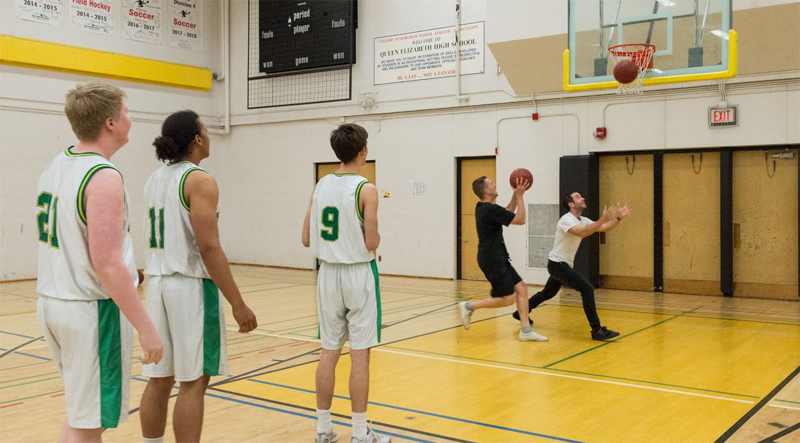
I am a pretty obsessive basketball fan and player. I play in a league and, if possible, would probably play everyday. One of the best things about shooting the film was having access to a gym everyday. I played a lot of BUMP with the actors during shooting.
What was the process for casting the teens in the film?
We needed a LOT of teenage actors for this film so we cast as wide a net as possible. We had a casting director who helped connect us with more experienced actors and we also put out a casting call to high schools, local theatre groups, youth film groups… basically anywhere we thought there might be interested kids. We received a ton of really diverse submissions. Some of the kids were highly experienced but a lot had absolutely zero experience. Some of the kids were really passionate about acting while others, hilariously, seemed to view the opportunity as something good to put on a resume. We ended up casting a mix of these two groups. Amazingly, some of the kids with zero experience were the strongest and most professional. I had such a good time working with the younger actors that I genuinely entertained the thought of becoming a high school teacher – until I realized how much work that would entail…
Ah wow! Sounds like you really enjoyed the experience.
What was your approach working with such young and fresh actors?
As many of the younger actors had very little experience, I wanted to do as much preparatory work as possible (within ACTRA limits of course). I was able to arrange a few rehearsals and some of the actors got together on their own to practice as well. Oddly, rehearsing before a shoot is apparently not that common but I was extremely grateful that we were able to. The rehearsals were really helpful. A lot of what we did was talk about our own high school experiences and find common ground. The actors, particularly the guys portraying the basketball players, gelled quickly. As this was a novel experience for most of them, there weren’t many egos or preconceptions; they all just seemed excited and enthusiastic. It also seemed to help matters that they were portraying a bad basketball team. Most of the people we cast had no experience playing sports and this seemed to create a spirit of camaraderie. Once we were on set things went quite smoothly. As with all of the actors, I tried to give them clear objectives to work towards and a clear context within which they were working. Despite a lack of experience all of the actors were almost unbelievably easy to work with.
These actors have done a fantastic job. You would never think that they lacked the experience watching the film. They have done a brilliant job.
Can you talk about the music selection for the film and how you went about creating the soundtrack?
The music is primarily sourced from Calgary bands from the late ‘90s. I found most of this music from an amazing online resource called Calgary Cassette Preservation Society. Calgary Cassette Preservation Society is basically a huge archive of Calgary music from at least the ‘70s to present day. Calgary’s art scene is pretty close knit so in most cases someone involved in the production had a connection to the bands we were interested in. The most exciting discovery for me was a band called Mozart’s Rage that made a kind of Euro-Dance technopop. I couldn’t believe that people from Calgary were making this very slick, commercial-sounding pop music back then. Mozart’s Rage also seemed to be, in some respects, the most obscure band we included. None of the music people we consulted had ever heard of them which, again because Calgary is so close knit, seemed very surprising. We ended up using a really diverse range of music – punk, emo, rock, Eurodance, Jann Arden – and it feels exciting to include these strange links to Calgary’s past.
It definitely gives off that late 90’s vibe.
Thank you for talking to us Ted and sharing this information with us about the film. Good luck with it! I am sure it is going to do extremely well.