Review: ‘Sound of Metal’ a Treatise on Acceptance, Love, and Redefining Life Purpose
The Oscars have come and gone, and Darius Marder’s “Sound of Metal” won two awards, one for ‘Best Achievement in Film Editing’ and one for ‘Best Sound.’ Arguably, I would have liked to see it recognized in other ways, most notably Riz Ahmed’s heartbreaking performance as a heavy metal drummer who loses most of his hearing—but alas, this was not to be. It received two golden statutes, and I guess that’s enough.
It’s more important to talk about what “Sound of Metal” is in a deeper sense, which is, simply, a stark portrait of what it is like to not only become handicapped, but to become so in a way that makes your life’s passion impossible. Ahmed (portraying Ruben) plays the part well. At the film’s opening we see him, shirtless, tattooed, and sweaty, banging on drums at a rock show, his girlfriend and the band’s lead singer Lou (Olivia Cooke) playing to the crowd. But the sound is drowned out, low bass thumps the only phonic inkling.
It isn’t long before we realize it isn’t film style, but something worse: Ruben’s hearing loss, waxing and waning for what we glean is months, is finally reaching a critical point. After the show he confesses such to Lou; he stubbornly wants to go on, but the unreality of this underscores even his most ardent assurances. With protestation, Ruben finally agrees to go to a deaf learning center, managed by Joe (an excellent Paul Raci). Except there’s a catch: Ruben must sever ties with his friends (and even Lou) and learn what it is to be deaf. Joe’s clinic is not one that looks at deafness as a curse, but a beautiful way of life.
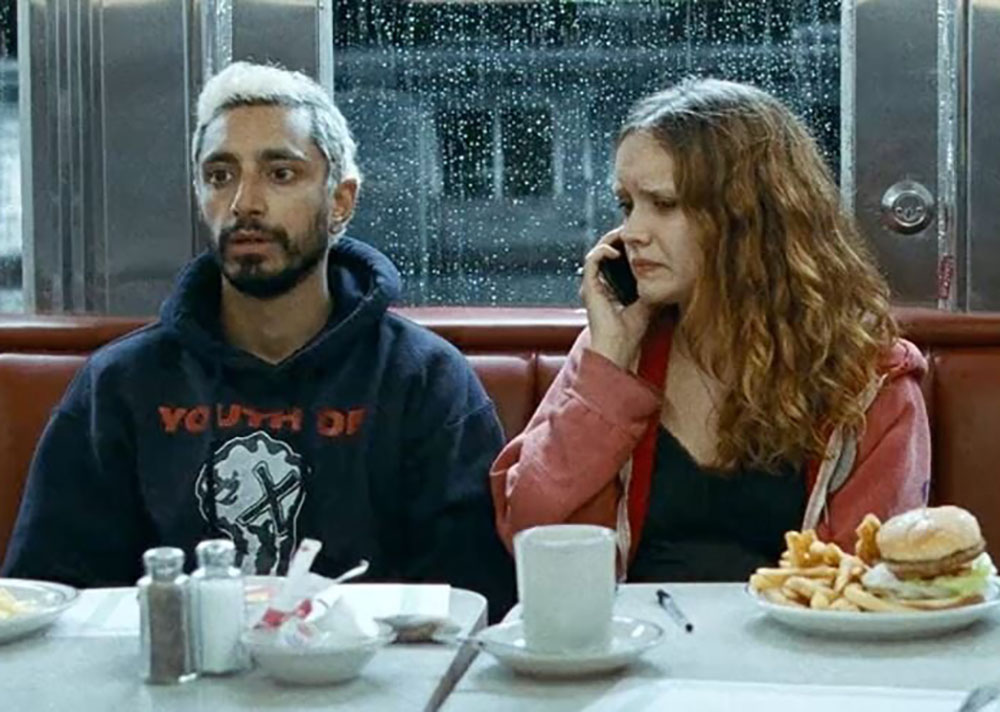
Where “Sound of Metal” excels is in its portrayal of Ruben’s plight, and the obstinate way he attempts to accept it. There are many movies that center on disability that fail to capture the 7 Stages of Acceptance. They skip to the end. But here writers Darius Marder, Abraham Marder, and Derek Cianfrance (“The Place Beyond the Pines”) flesh out a believable arc—an arc that Ahmed takes and runs with.
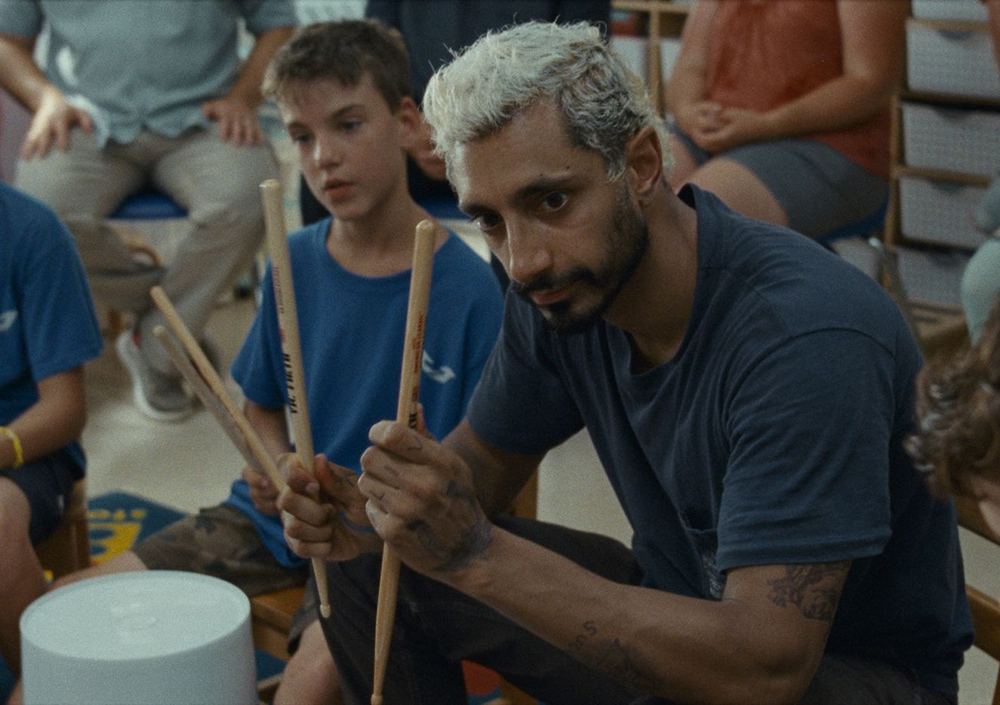
Ahmed’s performance is built on the kind of acting that shows the potential for virtuosity down the road. It’s in his face, his hands, his gestures, and mostly his eyes. He both struggles to fit in at Joe’s clinic and simultaneously excels. He fits in with others (especially the children) showing them the way of the drums. There is one touching scene where he shows a young boy rhythm by beating on a play slide while the boy places his ear to plastic.
But other scenes are much harder, such as when Joe tasks Ruben with truly getting in touch with his feelings. Ruben is asked to sit in a room with just a coffee every morning and write—just write his feelings, and nothing else until he experiences a ‘peace’ that Joe can only explain and that Ruben must understand. He tries and tries but cannot calm his mind. A scene where he loses his temper, shouting a scream that no one else can hear is especially harrowing.
What’s also harrowing are Ruben’s attempts to circumvent Joe’s rules. On more than one occasion he secretly uses Joe’s computer to contact Lou, as well as to call a doctor’s office to inquire—and set up consultation for—a Cochlear implant. I won’t spoil its outcome, but the ensuing conversation between he and Joe when the latter finds out is difficult to bear. To Ruben, deafness is a disease to be “cured;” to Joe it is something much deeper and richer.
I feel I’m failing to paint a picture of the sublime picture that “Sound of Metal” is. It’s pain, it’s healing, it’s protested acceptance…but amongst all, it’s about love and letting go. All of its actors—from Ahmed, to Cooke, to Raci—perform wonderfully, adding to a film that is painful yet inspiring. I’ve seen critics compare certain aspects of the film to addiction; and I suppose Ruben trying to fix his hearing, or trying to live outside his means and think that he can have his old life back without the work does hint of addictive disease.
But to me the film is about so much more. It’s about pain, it’s about loss, and it’s about discovering what your worth truly is. Is a weightlifter who can no longer lift still himself? Is a doctor who can no longer heal still worthy? It’s in this way that Ruben must question his plight. He can no longer drum; that life is over. But he’s still Ruben. It’s a personal journey; not one Ruben can learn at a deaf clinic, but one he finds, oddly, while walking the streets of Paris after visiting Lou. To hint at the film’s conclusion would be to do it a disservice. However, audiences that remember “Candy,” a somber yet realistic film starring Heath Ledger, will have some idea what to expect.
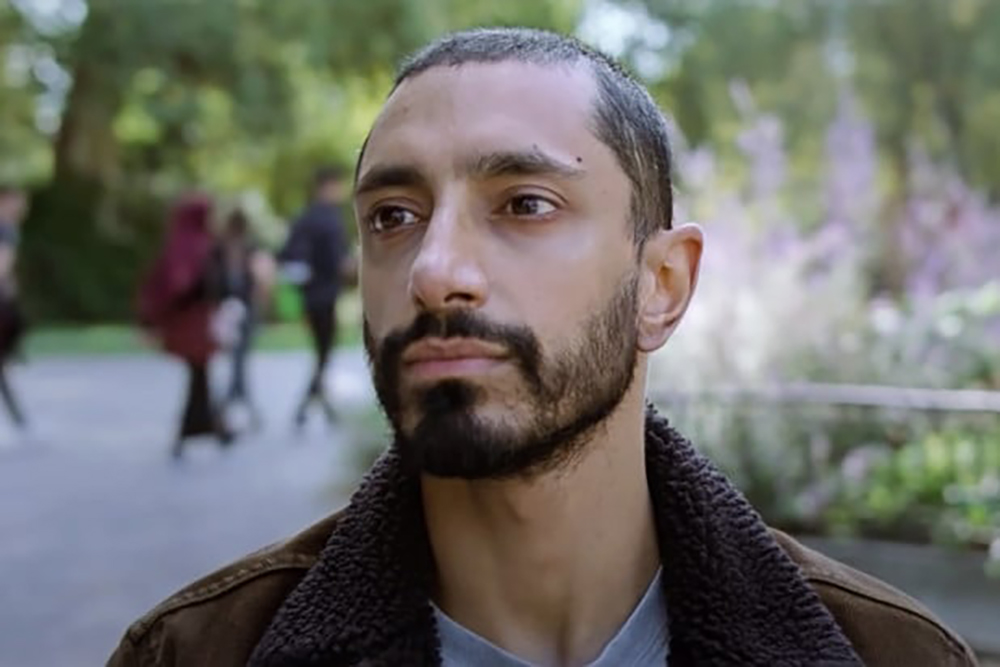
“Sound of Metal” is a fantastic film. It’s poignant and kind, where a more forceful film on the topic would have handled the material differently, likely to its detriment. And under it all, the film is more indie than we’re used to seeing from Hollywood. The film is painted with risk, but a calculated risk that paid off. Riz Ahmed is at the top of his form here, and his closing scene, on a park bench in Paris, silence all around him, is among the most pensive this year. You feel this film in your soul. It’s sometimes difficult to watch, but is worth the payoff. “Sound of Metal” brings you to the brink of human emotion; and, as the best films do, lingers long after the credits end.